™
Contact Us

What gamification research found
Sailer and Homner’s 2020 meta-analysis found positive average effects on learning, motivation and learning-related behaviour. The analysis of knowledge and understanding covered 19 comparisons and 1,686 learners. That finding held up more consistently when the authors focused on studies with stronger methods. Some analyses also favoured combining competition and cooperation over competition alone. These were educational measures, not evidence of reduced workplace injuries. (Sailer and Homner, 2020)
Gamification means adding game elements to another activity. A complete board or card game has its own rules and purpose. The research can inform questions about design, but the two formats should not be treated as interchangeable.
Connect points and teamwork to a purpose
In a 2017 randomized online-simulation study, Sailer and colleagues varied combinations of game elements. Badges, leaderboards and performance graphs influenced participants’ sense of competence and whether the task felt worthwhile; avatars, stories and teammates influenced a sense of connection with others. The study did not produce the intended increase in participants’ sense of choice. The findings concerned specific psychological experiences, rather than proof that adding points automatically improves learning. (Sailer et al., 2017)
That gives a facilitator a useful design question: what action earns a point, and why is that action valuable? A scoring rule is easiest to explain when it connects visibly with what the group is trying to do.
Make recognition understandable.
A participant should know what a point or achievement represents. It might recognise a useful explanation, a completed in-game mission or helping another person understand the instructions. Keep those meanings visible and consistent during the activity.
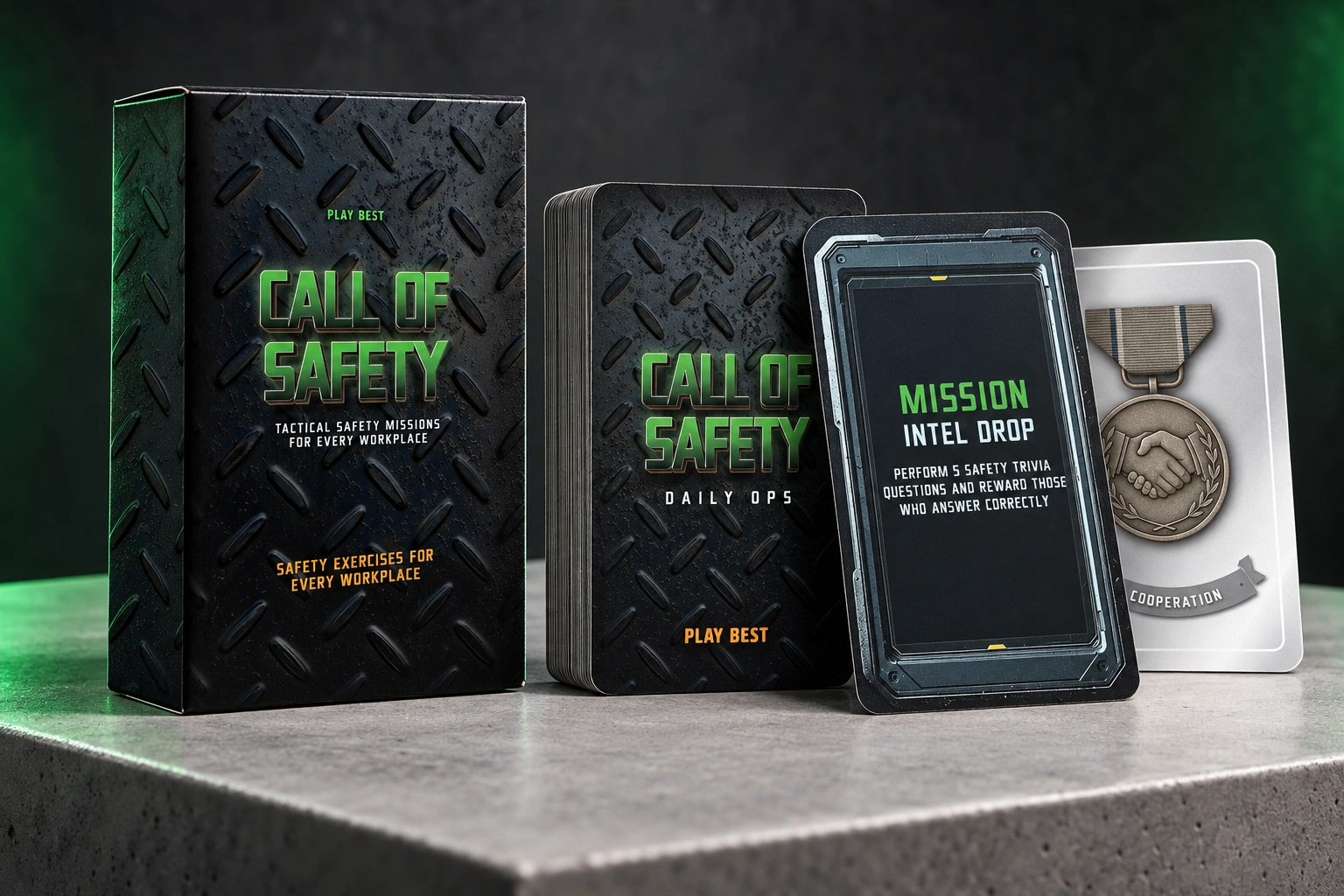
Call of Safety includes missions, points and Special Achievement Cards. When considering it for a team, review the game’s components and decide how the activity will fit into the workplace’s existing approach to participation and follow-up.
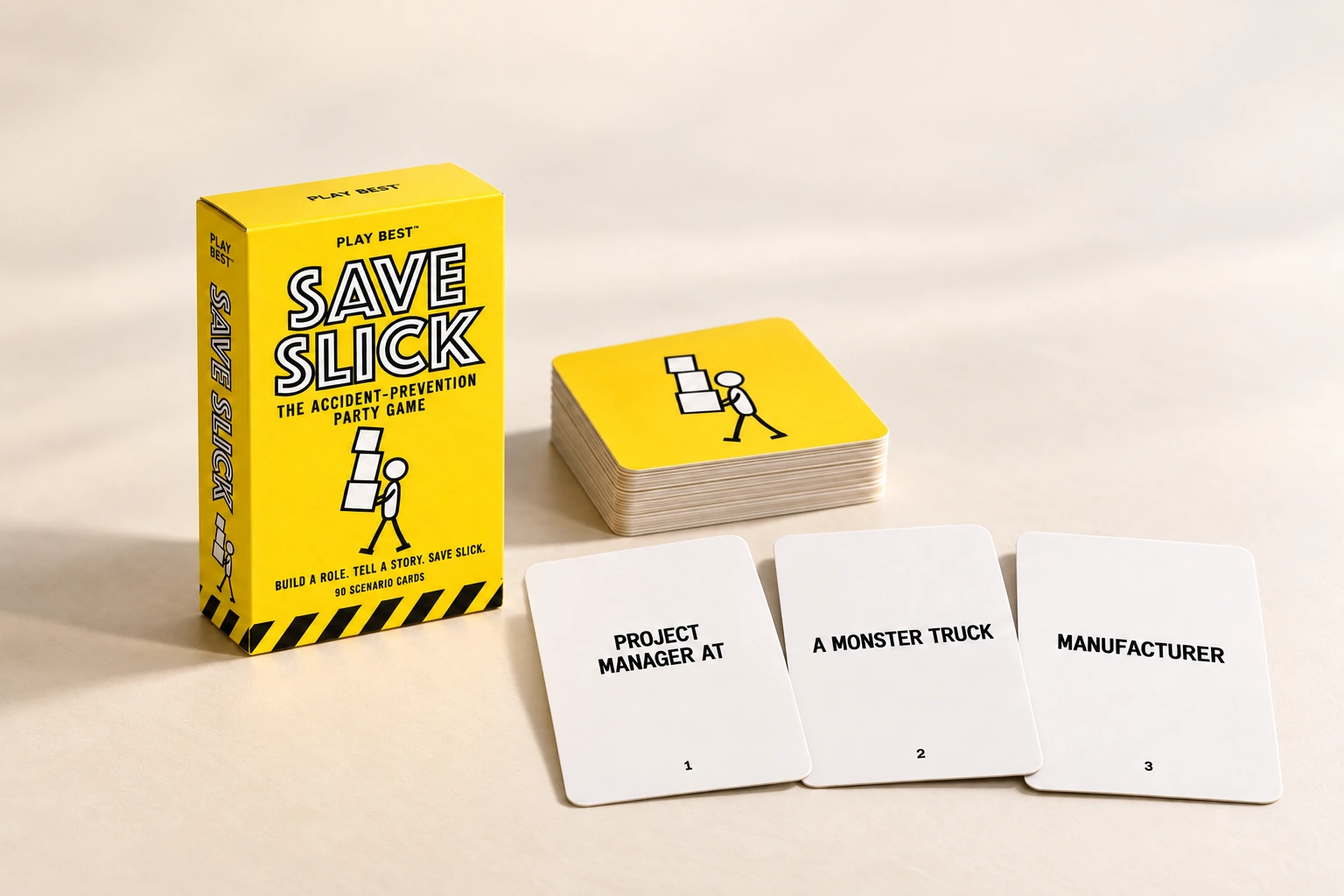
Save Slick gives a player a different judging task: choosing a prevention idea for a fictional accident story. A facilitator can use the end of the round to ask what made the idea persuasive and what would need checking in a real setting.
Check whether the rules support the conversation.
Watch who gets a turn, who asks questions and whether the score is crowding out the explanation. If participants rush past the topic to finish first, the session may need more time for discussion. If someone is unsure about the rules, explain the next turn before adding another challenge.
A brief feedback question can help: which part of the activity made it easier to contribute? Keep that feedback alongside a separate check of the intended learning. Enjoyment and understanding are both useful information, but they answer different questions.
Our evaluation guide offers a simple way to record the results and decide what to change for the next group.
Research & sources
Links lead to the original papers or their indexed abstracts. The studies used their own activities and interventions; they did not evaluate PlayBest products.
- Sailer and Homner (2020). The gamification of learning: a meta-analysis. Educational Psychology Review.Meta-analysis; online publication in 2019, journal issue in 2020
- Sailer et al. (2017). How gamification motivates: An experimental study of the effects of specific game design elements on psychological need satisfaction. Computers in Human Behavior.Randomized experiment in an online simulation