™
Contact Us
Learning and workplace outcomes differ
A meta-analysis by Bisbey and colleagues, published in a 2026 journal issue after appearing online in 2025, examined 157 independent safety-training studies. It found positive average effects on learning, applying skills at work and safety indicators. The average effects were larger for learning and applying skills than for overall safety indicators. These outcomes were measured separately; learning gains cannot be converted into an expected percentage reduction in injuries. The review covered safety training broadly, not games specifically. (Bisbey et al., 2026)
For someone planning a game session, this distinction is useful. A knowledge question, a workplace observation and an injury measure each tell a different part of the story.
What active safety training can contribute
Burke and colleagues’ 2006 meta-analysis included 95 quasi-experimental studies involving 20,991 participants. More engaging training methods were associated with greater knowledge acquisition and fewer negative safety outcomes. The most active approaches included behavioural modelling, hands-on practice and dialogue. The review supports examining participation within training; it does not establish that any particular commercial game produces those outcomes. (Burke et al., 2006)
A 2012 systematic review by Robson and colleagues found strong evidence for effects of occupational safety training on worker behaviours, but insufficient evidence for health outcomes such as injuries and illnesses. Its 22 studies used different inclusion criteria from other reviews. Reading the reviews together helps explain why the strength of a claim depends on the outcome and evidence considered. (Robson et al., 2012)
Plan the link between a conversation and an action.
Start with a task or topic that belongs within the team’s existing safety programme. Decide what the game will contribute: introducing a question, exploring a fictional situation or revisiting something already taught.
Then identify the next step. It might be checking a procedure, asking a specialist to clarify a point or arranging the appropriate practical instruction. Give that step an owner and a place in a later briefing. This makes the discussion easier to follow through.
Keep the roles clear. A participant can offer an observation without being expected to redesign a process at the table. The responsible people still need to review proposed changes in the actual workplace context.
Give the game a defined role.
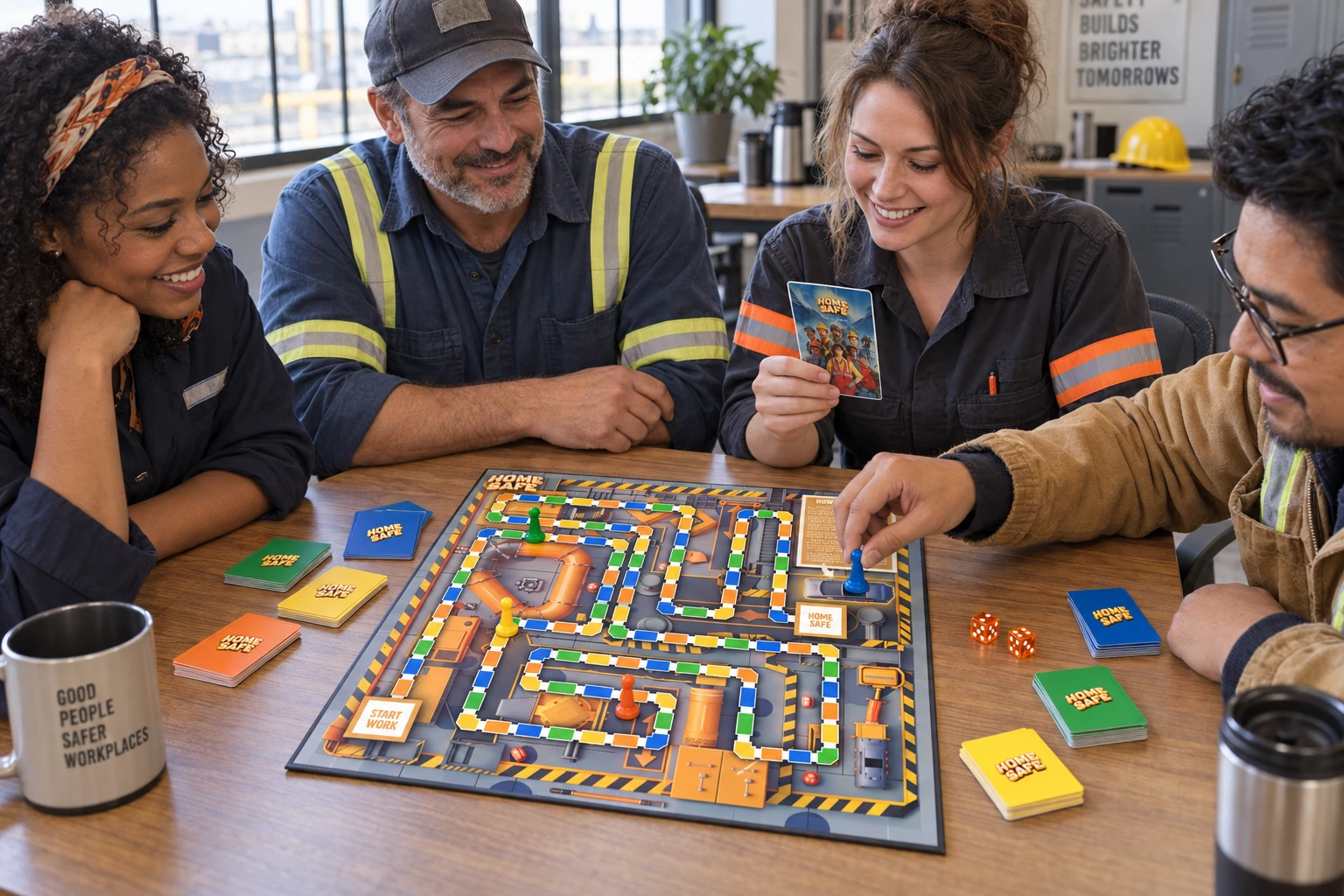
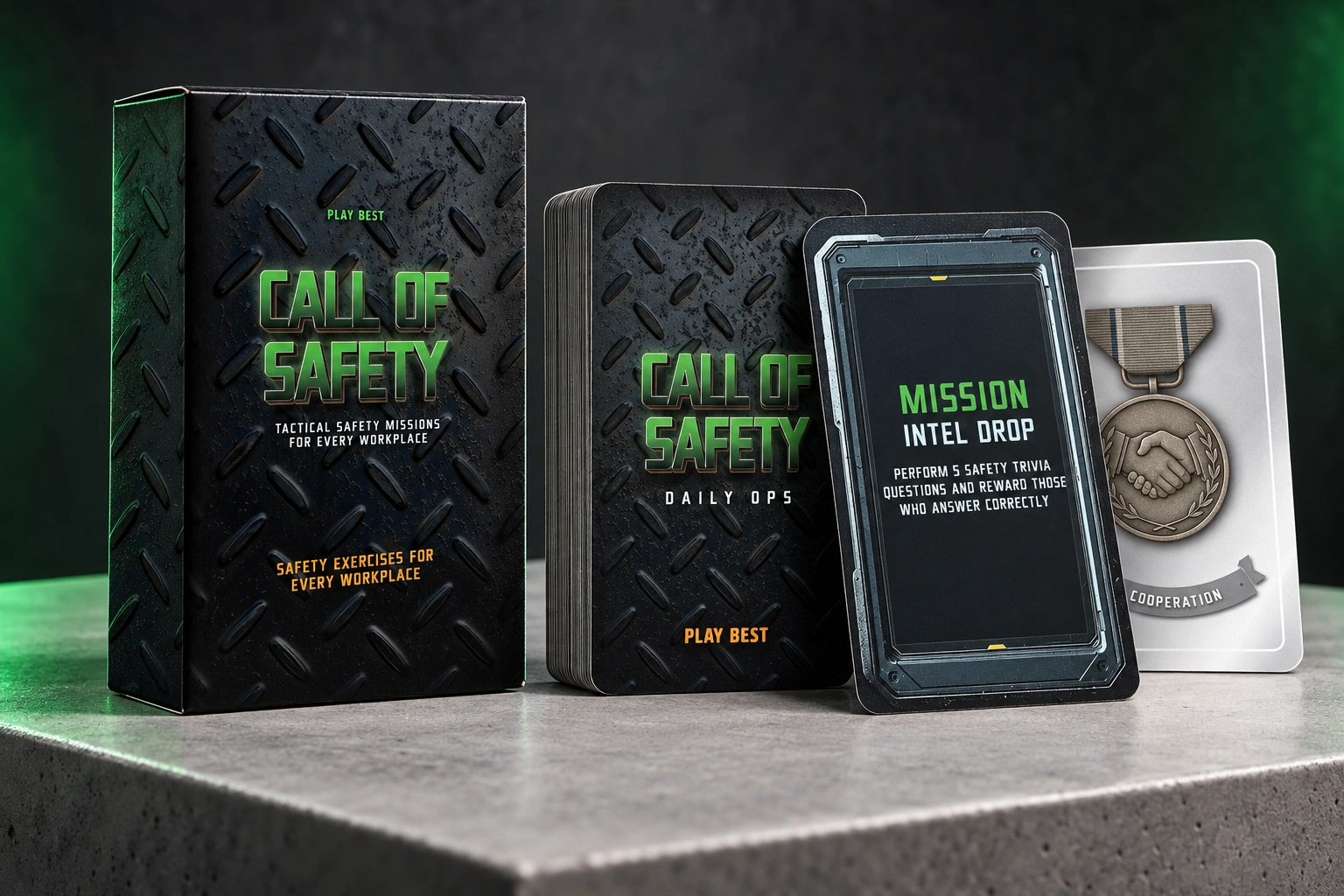
Call of Safety uses missions and recognition, while Home Safe offers board-game and Trivia formats. A team could consider which format fits the intended gathering and how the discussion will connect with its existing follow-up process.
For example, a short question round could end with a list of terms people want clarified. A later briefing could answer those questions using the correct references. The next activity could check whether the explanation is understood. This is an illustrative planning sequence, not a programme validated by the cited studies.
Allow the activity to reveal gaps. A question that remains open may be more useful than a smooth session in which everyone appears to agree. What matters next is whether the gap is addressed.
Describe results at the level you measured.
If participants answered more questions correctly, report the knowledge result. If a follow-up action was completed, report that action. If you measured workplace practice, explain what was observed, when and by whom.
Incident trends need broader context, including exposure, reporting practices and other changes happening at the same time. A before-and-after change alone cannot isolate the effect of a game.
This approach gives a safety manager something more useful than a sweeping promise: a clear account of what was tried, what was measured and what should happen next. Our measurement framework can help you prepare that account.
Research & sources
Links lead to the original papers or their indexed abstracts. The studies used their own activities and interventions; they did not evaluate PlayBest products.
- Bisbey et al. (2026). How does training contribute to workplace safety? A meta-analysis examining the effects of safety training. Journal of Applied Psychology.Meta-analysis; online publication in 2025, journal issue in 2026
- Robson et al. (2012). A systematic review of the effectiveness of occupational health and safety training. Scandinavian Journal of Work, Environment & Health.Systematic review of worker safety and health training
- Burke et al. (2006). Relative effectiveness of worker safety and health training methods. American Journal of Public Health.Meta-analysis comparing levels of learner participation