™
Contact Us
What research says about debriefing
Tannenbaum and Cerasoli’s 2013 meta-analysis brought together 46 samples of team and individual debriefs. The authors reported an average performance advantage of approximately 25% over control conditions, with a standardized effect of d = 0.67. Studies covered simulated and real settings. This is a finding about varied performance measures and structured debriefs; it is not a 25% reduction in workplace accidents or a result specific to card games. (Tannenbaum and Cerasoli, 2013)
A later meta-analysis by Keiser and Arthur examined 61 studies and reported an overall positive effect of after-action reviews across training-evaluation criteria. The results varied with how the review was organised, including its focus and use of feedback. The 2021 paper strengthens the case for treating a review as a deliberate part of an activity. (Keiser and Arthur, 2021)
Decide what the debrief should accomplish.
Before the game begins, write down what the follow-up conversation is for. You might want to clarify a confusing term, compare responses to a fictional scenario or collect questions for a later safety briefing. A specific purpose helps you decide what to ask when play ends.
A short session does not need a long closing discussion. It does need enough room for people to explain what they noticed. Build that time into the meeting rather than discovering that the last turn has used the entire slot.
Keep the focus on the activity and the subject. If a real incident is raised, route any necessary reporting or investigation through the organisation’s established process. A game debrief has a different purpose from investigating an event.
Four questions for a short game debrief
Here is a suggested five-minute close for a short discussion game. Allow more time if the discussion uncovers an issue that needs attention; the cited reviews did not test this particular five-minute format.
- What did we notice? Invite one observation from each person who wants to contribute.
- Where did we disagree? Identify the assumption or missing information behind different answers.
- What connects with our workplace? Choose one relevant point and identify the local reference needed to check it.
- What happens next? Record one follow-up question or action, with an owner and a sensible time to return to it.
Leave room for “we need to check.” An unresolved question can be a useful outcome when the group knows who will answer it. Avoid ending with an unsupported explanation simply to make the conversation feel complete.
Connect a fictional scenario with a real question.
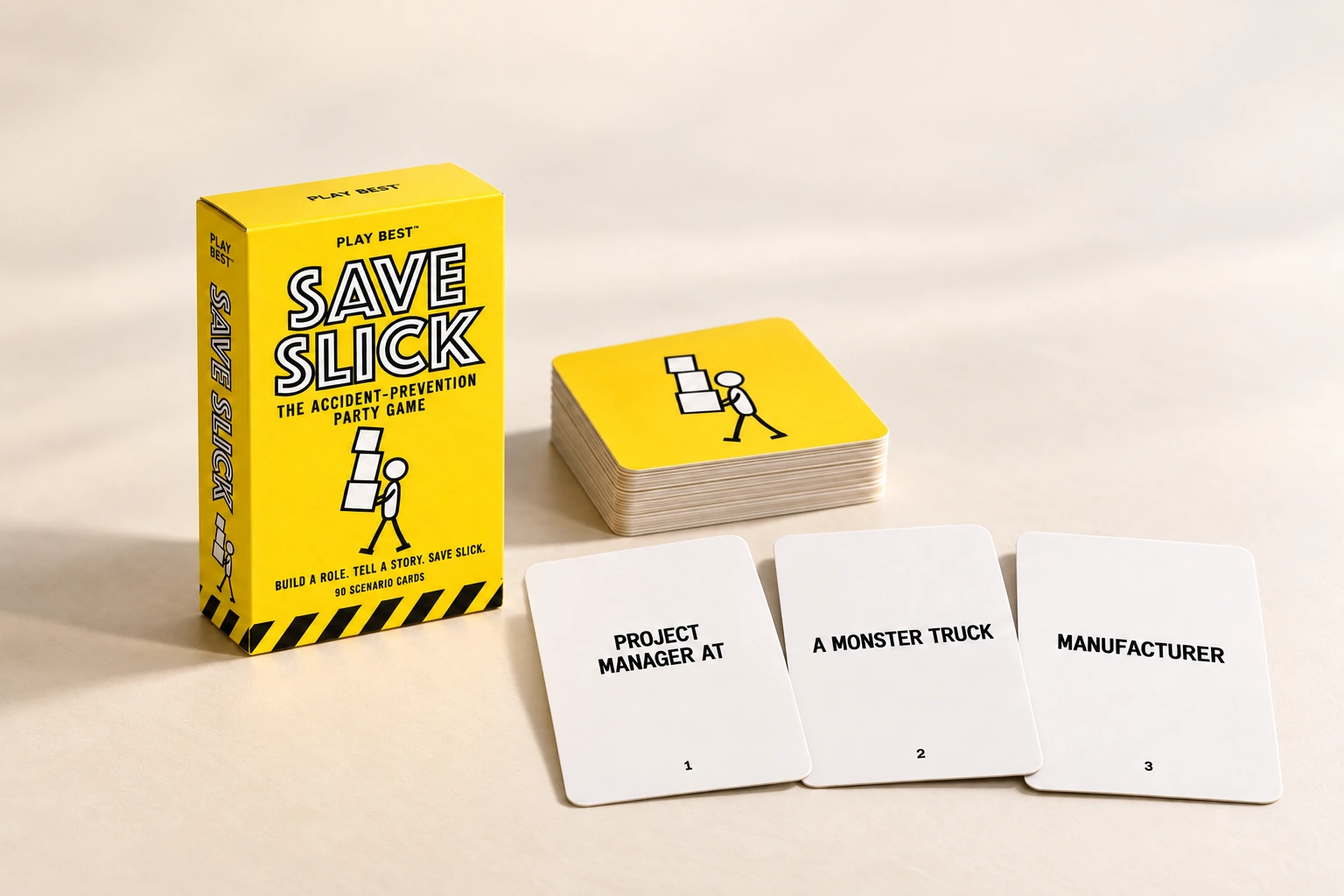
Save Slick asks players to invent a fictional accident and pitch a prevention idea. After a round, a facilitator could ask which assumptions made the story possible and what additional information would be needed before applying an idea at work.
That keeps the creative part of the game intact while adding a useful discussion. A winning suggestion in the story is a proposal to examine. The workplace’s actual task, equipment and procedures still need to be considered by the appropriate people.
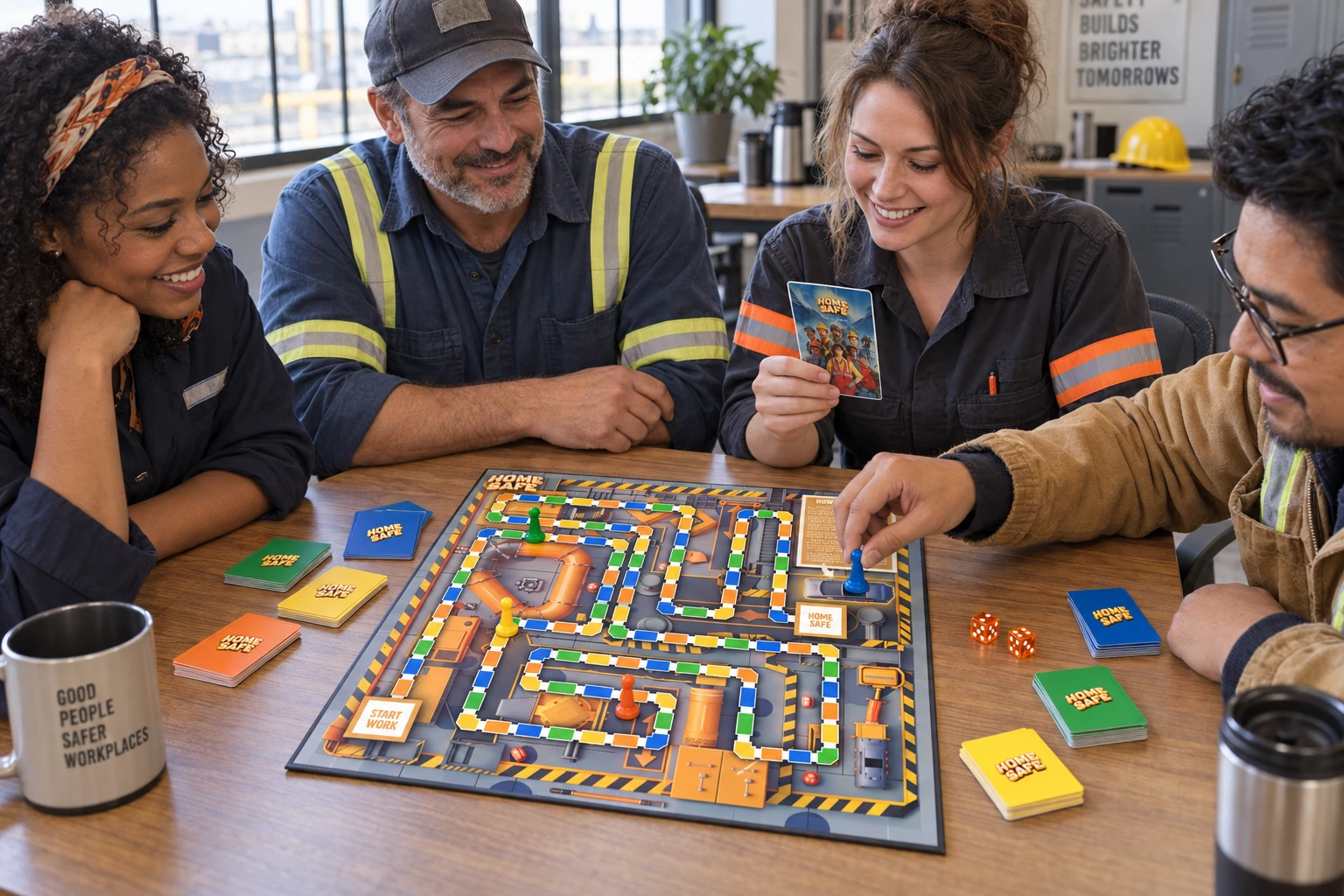
With a question-and-answer format such as Home Safe: Trivia, the close might be simpler: which answer surprised the group, which explanation needs clarification and which topic should return at a future meeting?
Make the agreed follow-up easy to find.
A brief note can record the topic, the question, its owner and when the group expects an update. At the next meeting, close the loop before starting something new. If the answer changed the group’s understanding, explain what changed and where the information came from.
For evaluating the session, keep a distinction between people enjoying the game and people completing the follow-up. Both can matter, but they tell you different things. Our measurement guide offers a practical way to record them.
Research & sources
Links lead to the original papers or their indexed abstracts. The studies used their own activities and interventions; they did not evaluate PlayBest products.
- Tannenbaum and Cerasoli (2013). Do team and individual debriefs enhance performance? A meta-analysis. Human Factors.Meta-analysis of team and individual debriefs
- Keiser and Arthur (2021). A meta-analysis of the effectiveness of the after-action review (or debrief) and factors that influence its effectiveness. Journal of Applied Psychology.Meta-analysis; online publication in 2020, journal issue in 2021