™
Contact Us
Choose the conversation first.
For a personal opening, Hearts of Safety asks people to finish a sentence about the people and moments that matter to them. Its full game includes a memory challenge. A single prompt can also open a discussion about why getting home safely matters.
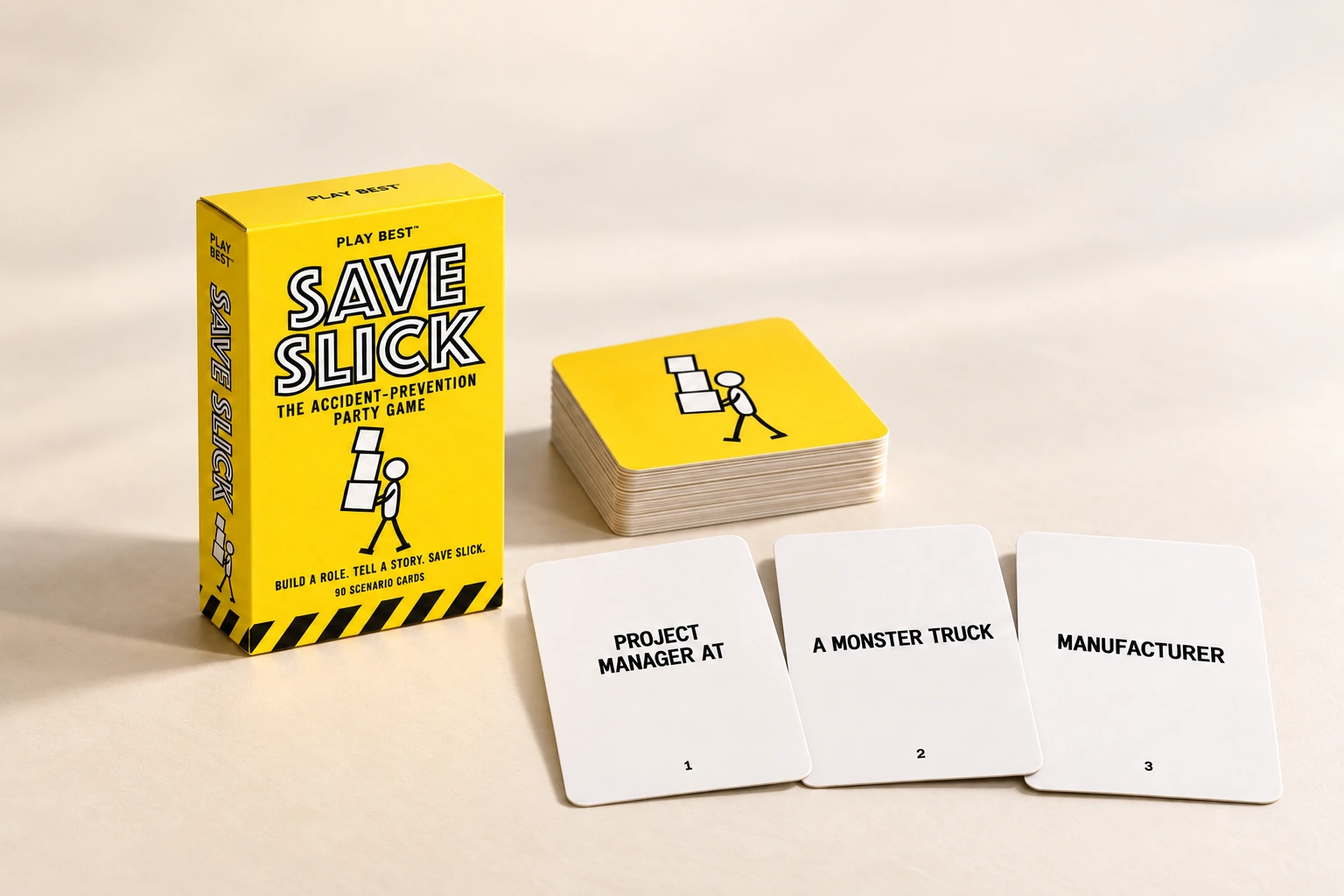
For a shared question, Home Safe: Trivia puts workplace safety topics on the table. For a more creative group, Save Slick asks players to invent a fictional accident and pitch prevention ideas. If your focus is driving for work, explore Drive Safe and its board game and Trivia formats.
Decide whether you are running the full game or using one card as a discussion starter. Say which at the beginning, and follow the included rules when playing a complete game.
Give the group room to take part.
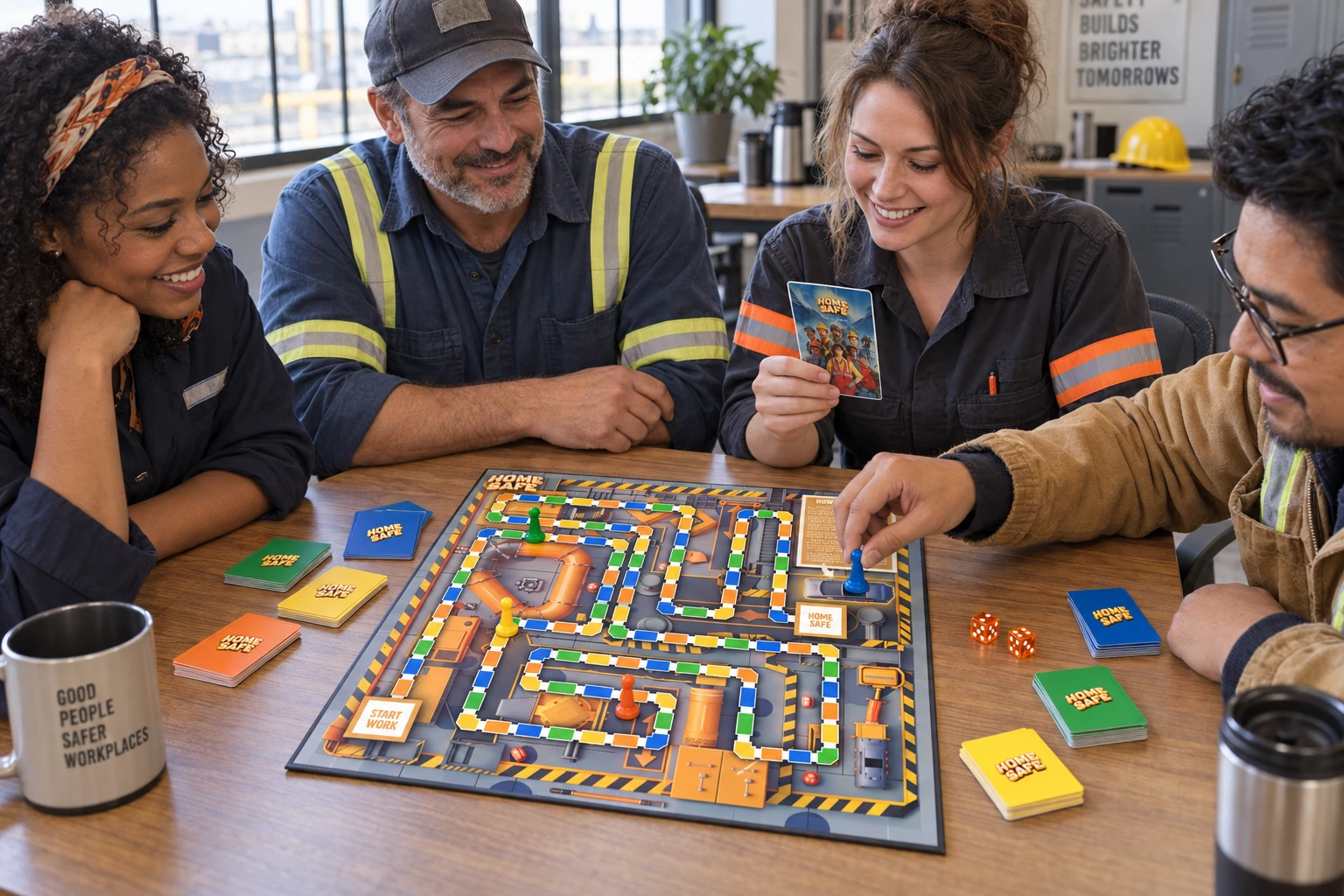
Read the game’s player guidance before choosing table sizes. For a larger meeting, several small groups can play in parallel and share one observation afterwards. Allow room for the cards and, if you choose a board game, the board and pieces.
Have a facilitator read the first card aloud and explain the turn order. Let people listen before answering, and make passing a personal prompt an easy option. Use fictional examples when a discussion could single out a colleague or turn into a retelling of an incident involving someone in the room.
Try a 15-minute discussion.
This is a suggested meeting activity using a card, rather than the play time for a complete game. Keep the deck’s full rules available if your group wants to play a full round later.
- Minutes 0–2: set the focus. Name the topic and explain how everyone can contribute. For example: share one observation about a familiar workplace situation.
- Minutes 2–7: read and respond. Read the selected card. Give people a moment to think, then invite answers in turn.
- Minutes 7–12: connect it to work. Ask what feels familiar and what the group would want to check in its own setting. Keep the discussion tied to the chosen topic.
- Minutes 12–15: choose a follow-up. Agree on one question to take to the right person, or one existing resource to revisit. Give the follow-up an owner.
Make the next step specific.
End with something concrete: a question for the safety lead, an item for the next briefing or a reminder of where to find an existing procedure. If the group is uncertain about an answer, record the question and check the relevant workplace guidance.
For an ongoing activity, Call of Safety uses missions, points and Special Achievement Cards to recognise participation. That gives you a different format to explore after a one-off meeting.
Keep your organisation’s procedures and required training as the reference for workplace decisions. Use the game to create a discussion and surface questions for follow-up.
Plan for your team.
When asking about decks for a meeting or safety day, include the audience, number of people, preferred format and event date. If you want workplace-specific questions or company branding, describe that too. Tell us about your team order and we can discuss which game fits.