™
Contact Us
How quizzing supports recall
Yang and colleagues’ 2021 meta-analysis combined 222 independent classroom studies involving 48,478 students. Quizzing produced an average benefit for academic achievement. The reported effect, g = 0.499, expresses the difference between groups in standard-deviation units. Results varied with factors including the comparison activity, corrective feedback and repetitions. This was evidence about classroom learning, not a prediction of the effect of a workplace deck. The effect size also does not mean a 49.9% improvement. (Yang et al., 2021)
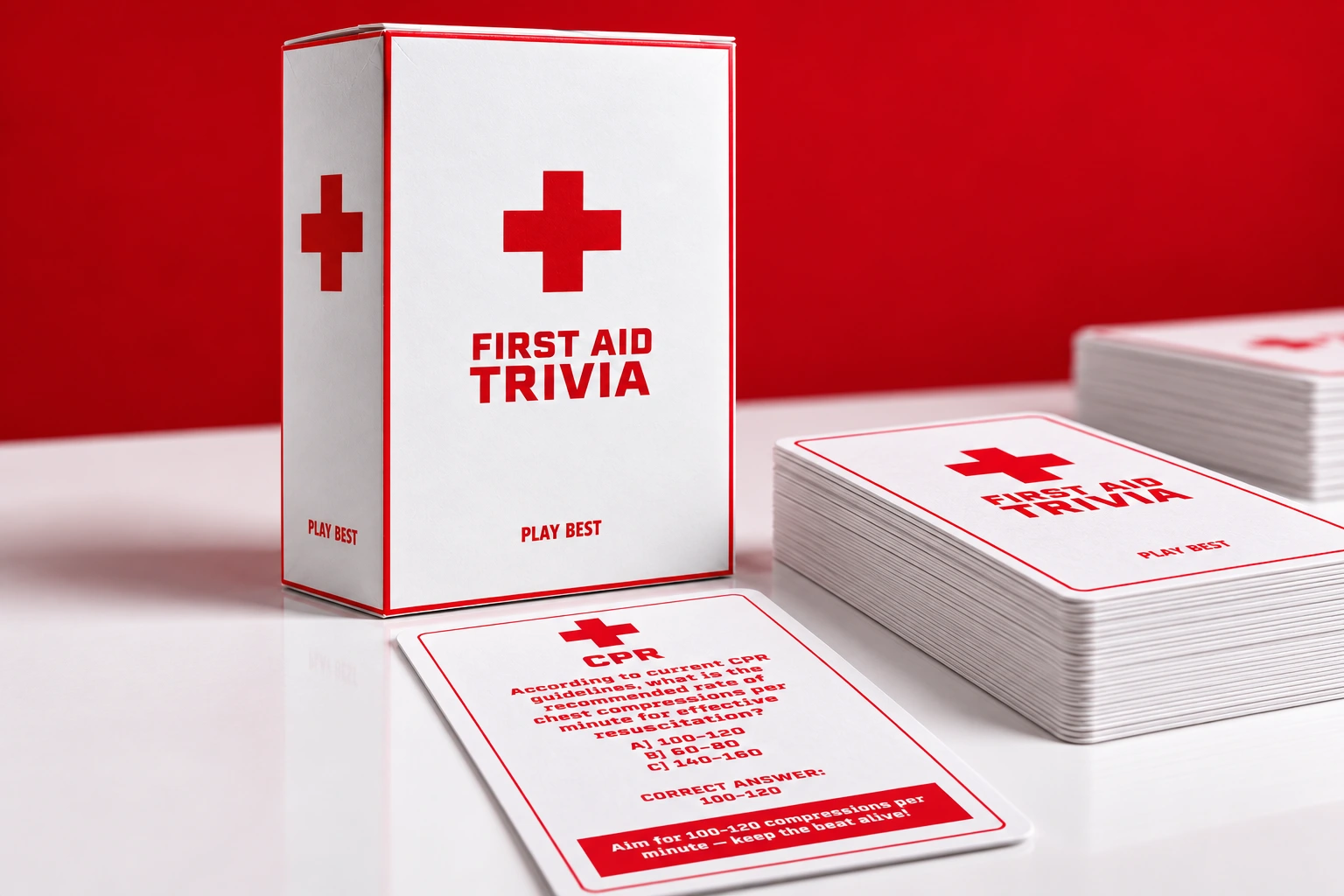
A question card gives a facilitator a convenient way to ask for an answer before showing the explanation. The opportunity is useful only when the question matches the intended topic and the group can check what the answer means.
Why spacing the sessions matters
Cepeda and colleagues reviewed 317 experiments on distributed practice and verbal recall in 2006. They examined how the gap between practice sessions relates to later recall. When information needed to be remembered for longer, the best-performing gap between sessions generally grew too. The research supports thinking carefully about timing; it does not prescribe one universal weekly schedule for every workplace topic. (Cepeda et al., 2006)
For a team, that means you can plan a return to a useful idea instead of assuming that a single enjoyable session has finished the learning. The later question should give people a chance to recall and explain, with support when something is still unclear.
Plan a small sequence of conversations.
Here is an illustrative three-meeting plan. Adjust it to the group’s existing training and the purpose of the activity.
- First meeting: introduce and discuss. Choose a relevant question, let people consider an answer, then read the explanation and connect it with the workplace context.
- Later meeting: recall and explain. Return to the topic before showing the answer. Ask what people remember and which part needs checking.
- Following meeting: use a fresh example. Invite the group to explain the same principle in a different appropriate scenario. Record questions that need further guidance.
This is a suggested facilitation plan, not the schedule used in either cited review. Its purpose is to make the choice of topic, timing and follow-up visible to the person running the session.
Leave enough time to check an answer.
A fast round can feel lively, but speed does not tell you whether someone understood the explanation. Decide how a player can ask for clarification and where the facilitator will look when a question goes beyond the deck.
When discussing a workplace procedure, use the current approved reference for that setting. If participants disagree about what it requires, capture the question for the responsible person. The game should create room to resolve uncertainty rather than reward a confident guess.
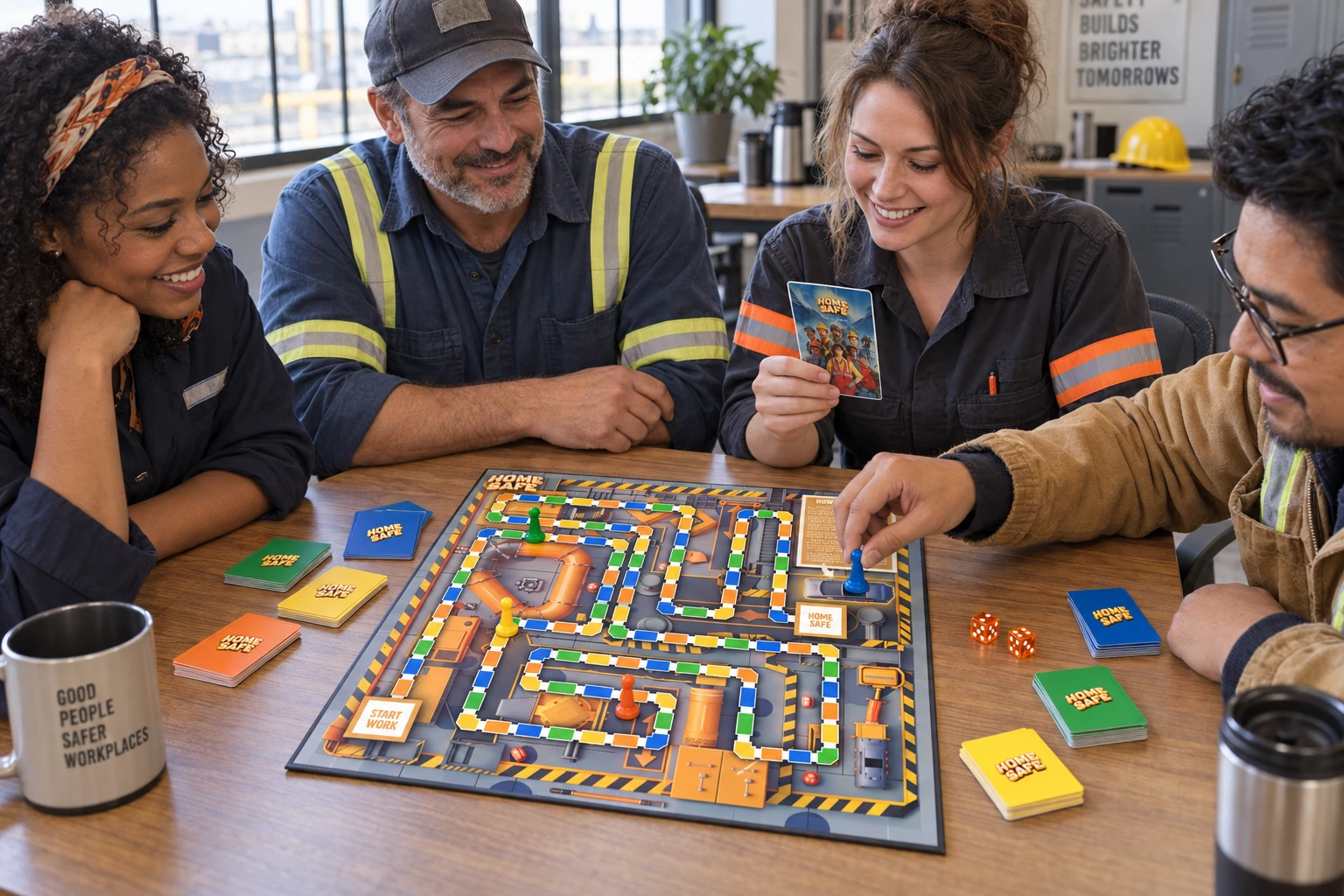
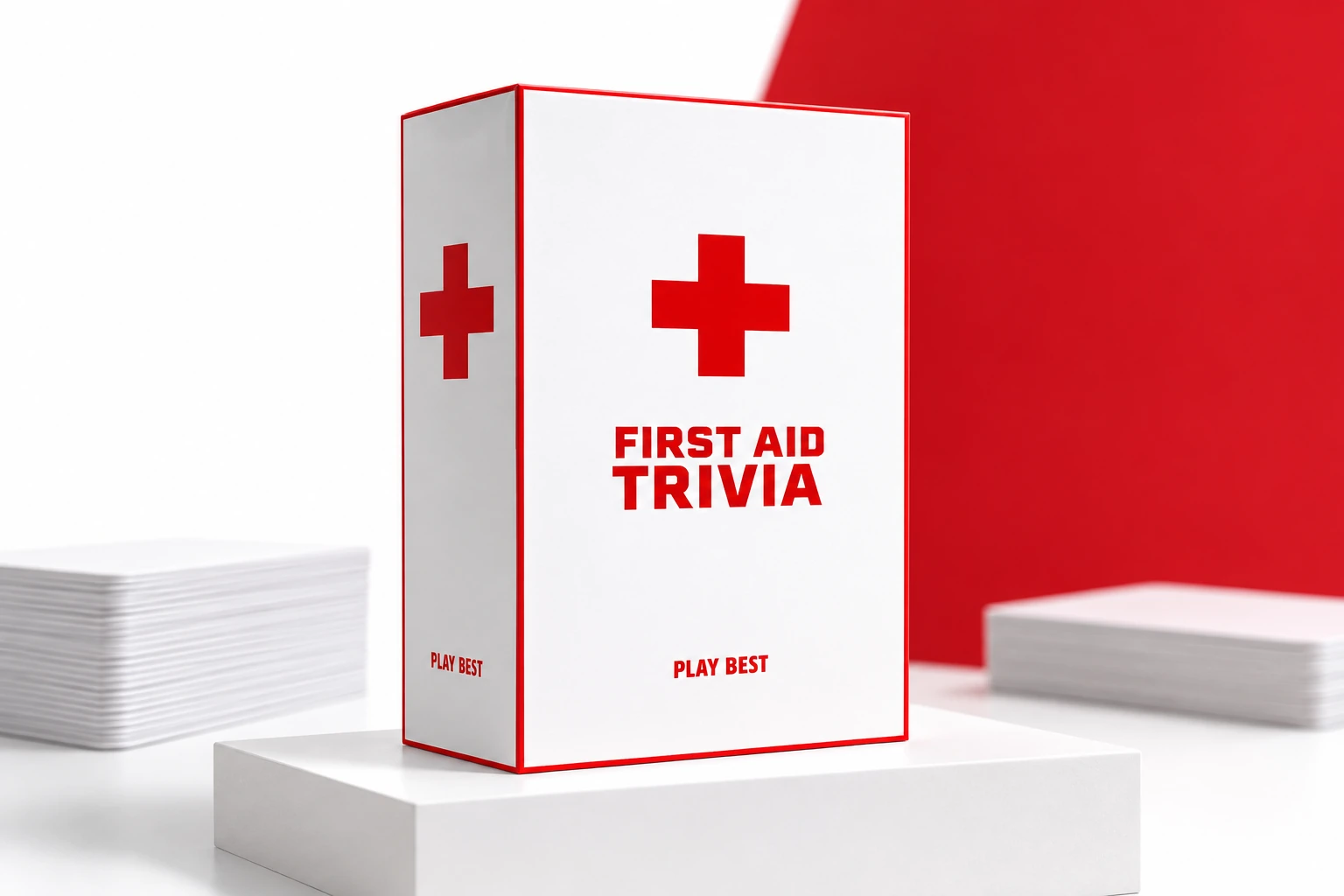
Home Safe: Trivia supplies workplace safety questions. First Aid Trivia supplies questions across first-aid topics. Neither a quiz score nor repeated play by itself demonstrates that a person can perform a practical skill; use the appropriate training and assessment for that objective.
Check what people can recall later.
Keep the later check brief and connected to the original aim. Ask a new question about the same idea, or ask someone to explain where they would find the relevant information. Record the result separately from the score achieved during the game.
If the group remembers the wording but struggles with the reasoning, use that as a clue for the next explanation. If a question is consistently misunderstood, review the material with the right subject specialist. Our evaluation guide shows how to include a delayed check without turning a short team activity into a large assessment project.
Research & sources
Links lead to the original papers or their indexed abstracts. The studies used their own activities and interventions; they did not evaluate PlayBest products.
- Yang et al. (2021). Testing (quizzing) boosts classroom learning: a systematic and meta-analytic review. Psychological Bulletin.Meta-analysis of classroom quizzing
- Cepeda et al. (2006). Distributed practice in verbal recall tasks: a review and quantitative synthesis. Psychological Bulletin.Meta-analysis of spaced practice and verbal retention