 ™
Contact Us
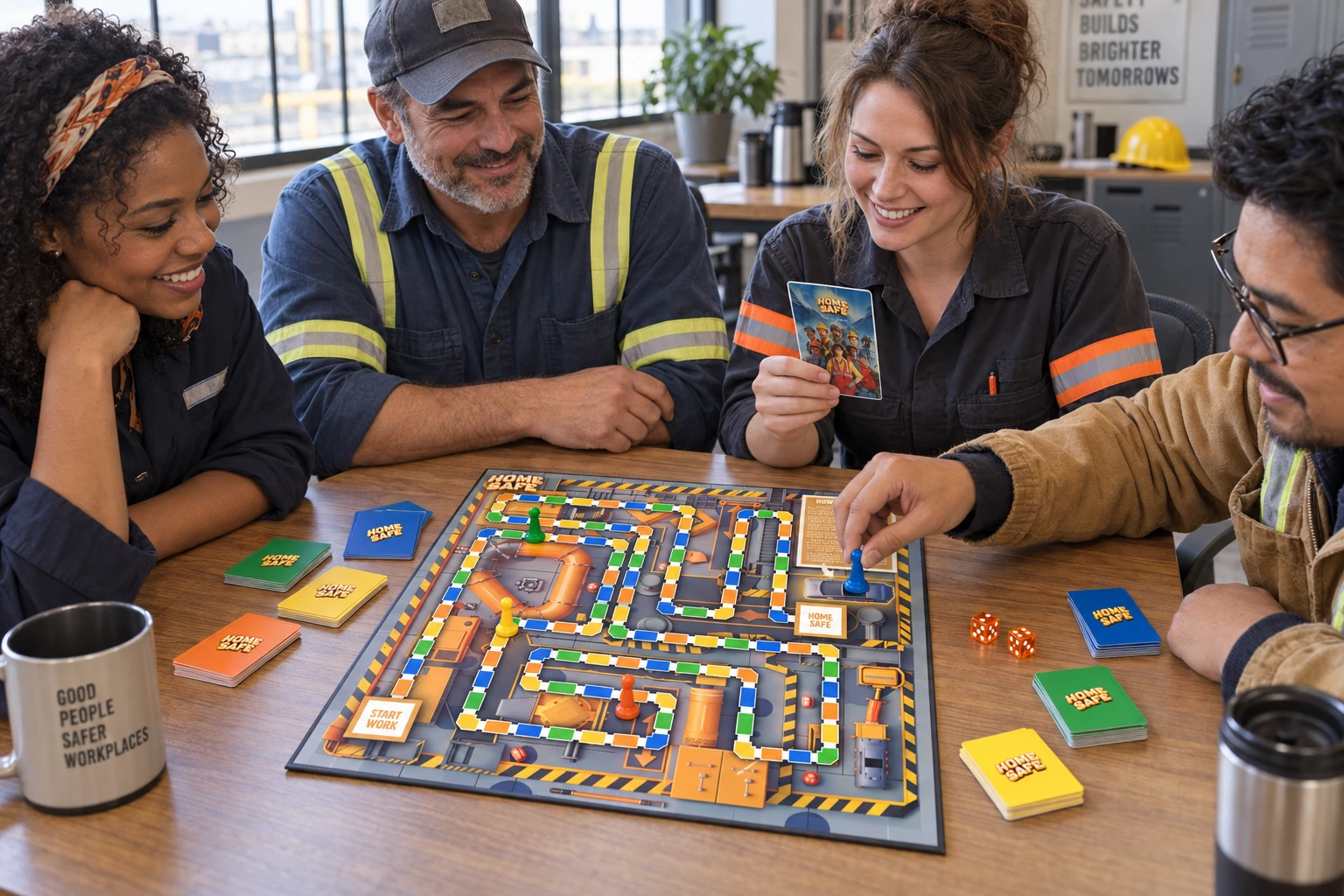
What serious-game research found
Wouters and colleagues’ 2013 meta-analysis included 77 learning comparisons involving 5,547 participants. Serious games produced small average advantages in learning and retention over conventional instruction. The review did not find a statistically significant overall advantage in motivation. Learning results were stronger when games were supported by other instruction, used across multiple sessions or played in groups. (Wouters et al., 2013)
Those findings make the way a game is used part of the buying decision. A facilitator needs to consider the question, the opportunity to respond and what happens after an answer. Ask to see a complete turn, including how the answer is explained and what the group does with it.
What the reported learning gains mean
Sitzmann’s 2011 review examined computer simulation games across 65 independent samples involving 6,476 trainees. The review reported average advantages of 11% for knowledge of facts, 14% for knowledge of how to perform tasks and 9% for retention relative to comparison instruction. Sitzmann also identified substantial publication bias, meaning the published results may give an overly positive picture. Games performed better when used actively and as a supplement; comparisons with other active learning sometimes favoured the alternative. These figures describe that body of digital simulation research, not an expected improvement from every game. (Sitzmann, 2011)
For a workplace buyer, the useful next step is to name the intended activity. Do you want people to remember information, discuss a scenario or discover what matters to a teammate? Each aim calls for a different kind of session and a different way to judge whether it helped.
Match the game to the learning objective
Before choosing a safety game, open the sample cards and walk through one turn. Ask whether a player must explain a choice, recall an answer, listen to another person or make a decision. Then check that the activity matches your meeting’s purpose.
A trivia deck gives you questions and answers to work with. A personal conversation deck gives you prompts and stories. A scenario game gives the group a situation to explore. Calling all three “learning games” is useful only if the person running the session understands those differences.
For example, Home Safe: Trivia offers a workplace question-and-answer format. Hearts of Safety asks people to finish personal sentences and recall each other’s stories. Choose the format for the conversation you want to create.
Give the game a clear role in the meeting.
Here is a suggested planning approach. Write down one aim, such as “everyone will explain where they would check an uncertain answer.” Select a relevant card, invite an individual response and then ask the group to explain its reasoning. Finish by identifying the workplace resource or person who can resolve any remaining question.
If you use one card as a discussion starter, describe it that way. If you are playing the full game, allow the time and group size recommended in its rules. That helps participants understand what is happening and keeps the activity manageable.
You can also revisit the topic at a later meeting. Our guide to questions, recall and repeated play explains the research behind returning to an idea after the first session.
Choose evidence that answers your question.
When reading a claim about game-based learning, check the participants, game format, comparison activity and outcome. A study of students using software may offer a useful idea without predicting what your team will achieve with a physical deck.
Use the research to make a better plan, then collect evidence from your own sessions. Our measurement guide gives you a practical way to separate participation, understanding, later recall and workplace follow-up.
Research & sources
Links lead to the original papers or their indexed abstracts. The studies used their own activities and interventions; they did not evaluate PlayBest products.
- Wouters et al. (2013). A meta-analysis of the cognitive and motivational effects of serious games. Journal of Educational Psychology.Meta-analysis of serious-game research
- Sitzmann (2011). A meta-analytic examination of the instructional effectiveness of computer-based simulation games. Personnel Psychology.Meta-analysis of computer simulation games
