™
Contact Us
Recognising hazards in construction images
Kanade and colleagues’ 2025 experiment involved 64 graduate students and OSHA’s digital hazard-identification training tool. The training group outperformed a control group receiving no additional training on later image-based hazard tests, particularly for fall and struck-by hazards. Missing-PPE hazards remained more difficult, and interruptions affected trained participants’ performance. The study measured recognition in a test setting, not accident rates among an experienced workforce. (Kanade et al., 2025)
The result is encouraging for a specific training task. It also shows why it matters to examine individual categories: a higher overall score can sit alongside a topic that still needs attention.
Assessing noise risks in a simulation
Yrjo and colleagues studied a noise-risk-assessment simulation with 27 senior and graduate students taking industrial-hygiene courses. Their 2024 paper compared gamified and non-gamified versions after common foundational instruction. The written assessment favoured the version with game elements on exposure assessment and use of exposure standards. It did not establish an advantage on every measure, including hazard identification and strategic reasoning. This was a small educational simulation study. (Yrjo et al., 2024)
Together, these examples show researchers testing particular decisions and skills rather than treating all safety knowledge as one score. That is a useful principle to carry into planning a discussion with your own team.
Name the recognition task.
Before choosing a game or scenario, describe what you want participants to notice. Are you discussing visible features of a scene, missing information or a question that should be taken to a qualified colleague? Those are related but different tasks.
Keep the activity within the facilitator’s remit. A fictional card or image is a starting point for discussion; it cannot provide all the information needed to assess an actual task. Use appropriate workplace guidance when connecting the conversation with the local setting.
Ask players what additional information would change their answer. This can make the limits of the scenario useful: the group can identify what it knows, what it assumes and what it needs to check.
Use a scenario to compare observations.
Here is a suggested tabletop discussion. Use a fictional delivery-area scene with a restricted view, a pedestrian route and a moving vehicle. Ask participants to note what they can see and what they would need to know before judging the situation. Then ask the group to compare three things: what each person noticed, what information was missing and who could help clarify the situation.
Record differences before moving to an explanation. A detail that one person notices immediately may be something another person has never considered. The facilitator can then connect the discussion with the relevant local reference or arrange a follow-up with the responsible person.
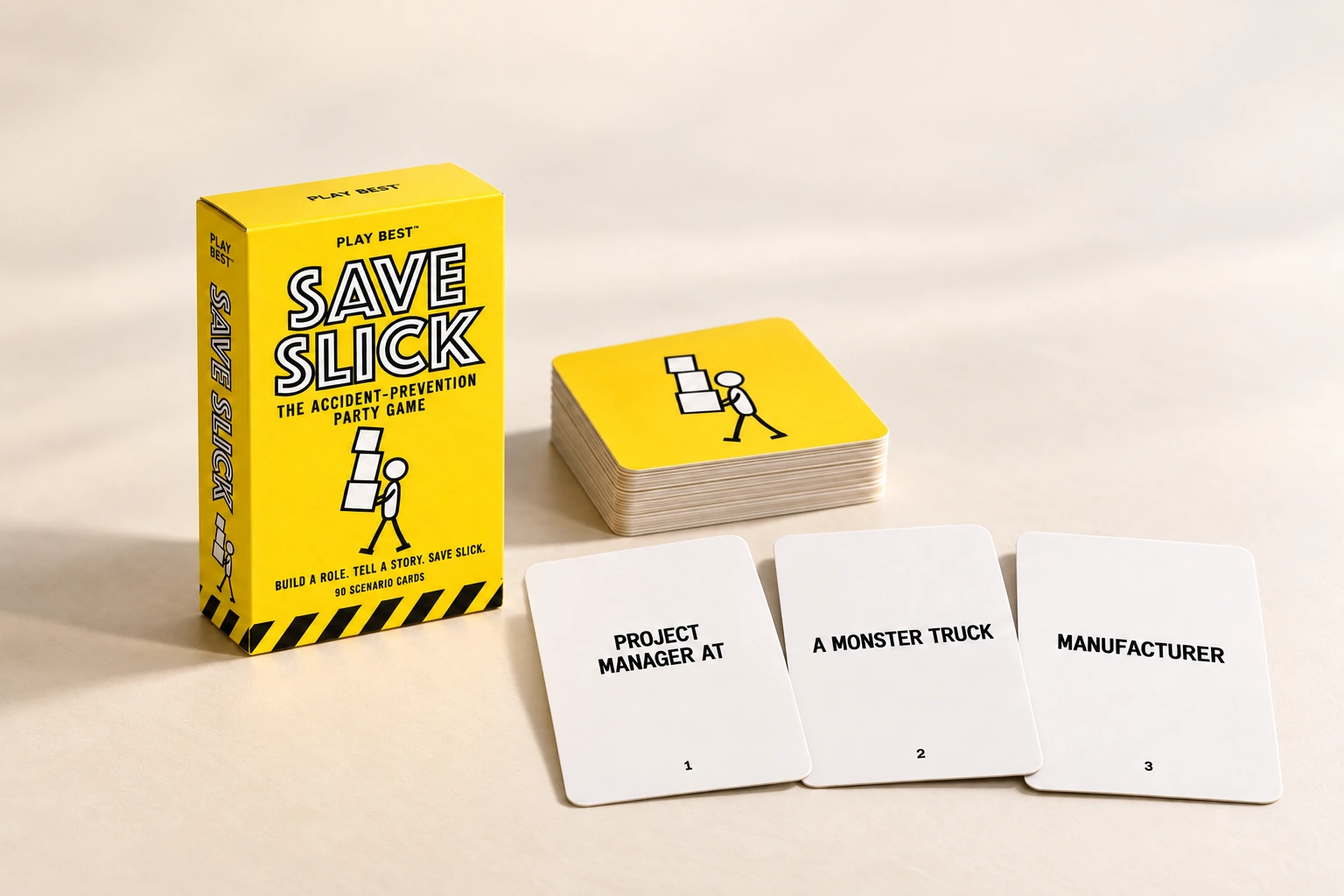
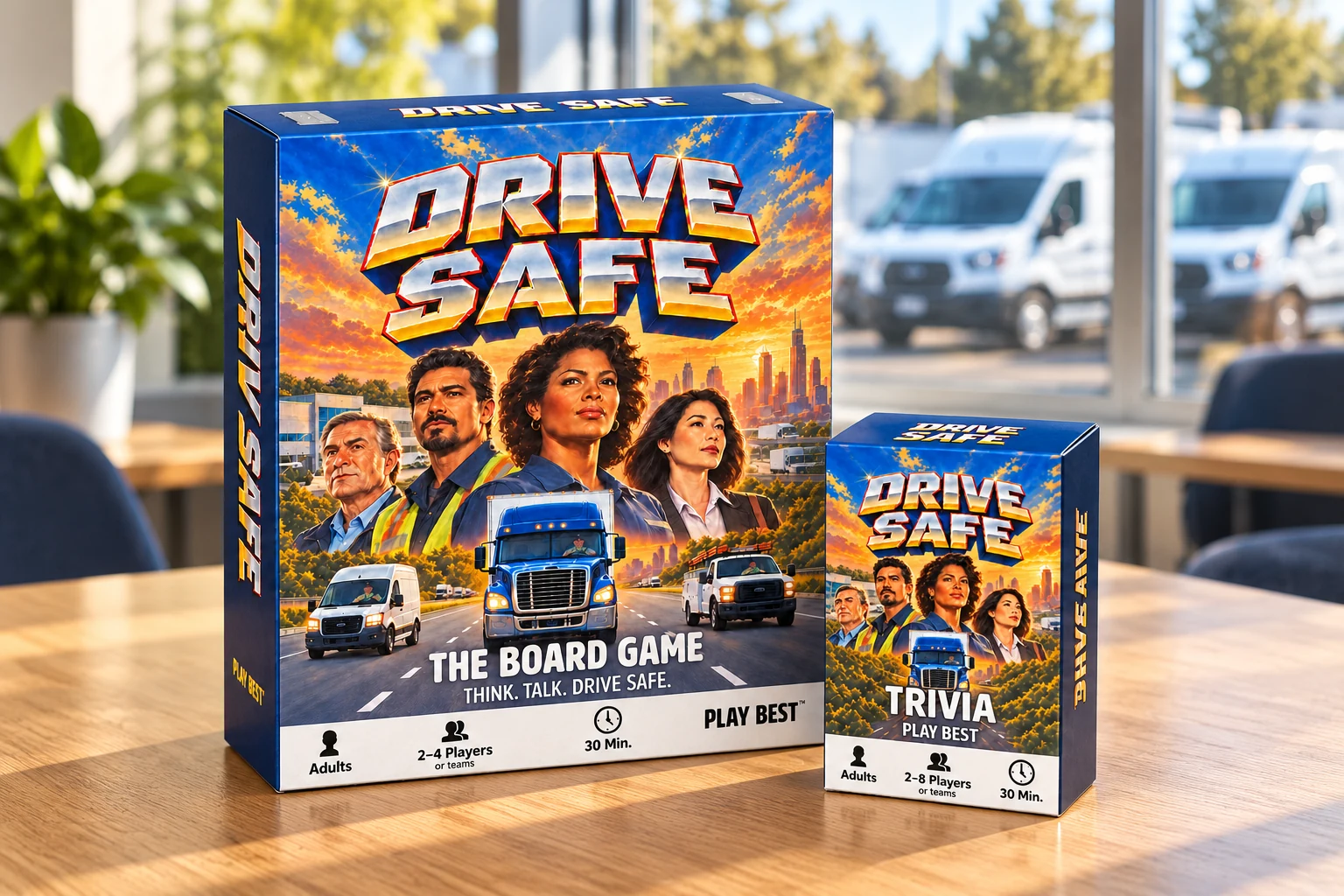
Save Slick uses fictional accident stories and prevention ideas. Drive Safe brings driving-for-work questions into a board-game or Trivia format. These are possible starting points for a conversation; neither was the intervention tested in the studies above.
Check a fresh situation afterwards.
If you want to evaluate recognition, use an appropriate new example after the discussion. Repeating the same picture can show familiarity with that picture. A different example gives you another way to explore whether participants can explain the relevant idea.
Keep results by topic where possible. If a group improves on one category and continues to struggle with another, use that information to plan the next explanation. Avoid treating a combined score as proof that every subject has been understood.
Finally, distinguish a training exercise from competence in the actual workplace. Practical tasks and specialist assessments need the appropriate oversight. A game can help start the questions that guide that next step. See our guide to measuring a session for a simple evaluation plan.
Research & sources
Links lead to the original papers or their indexed abstracts. The studies used their own activities and interventions; they did not evaluate PlayBest products.
- Kanade et al. (2025). Beyond traditional methods: the impact of game-based learning on safety training. International Journal of Industrial Ergonomics.Construction hazard-identification experiment with graduate students
- Yrjo et al. (2024). Enhancing risk assessment skills in hazardous environments: priming with a serious game approach. Safety Science.Gamified versus non-gamified industrial-hygiene simulation